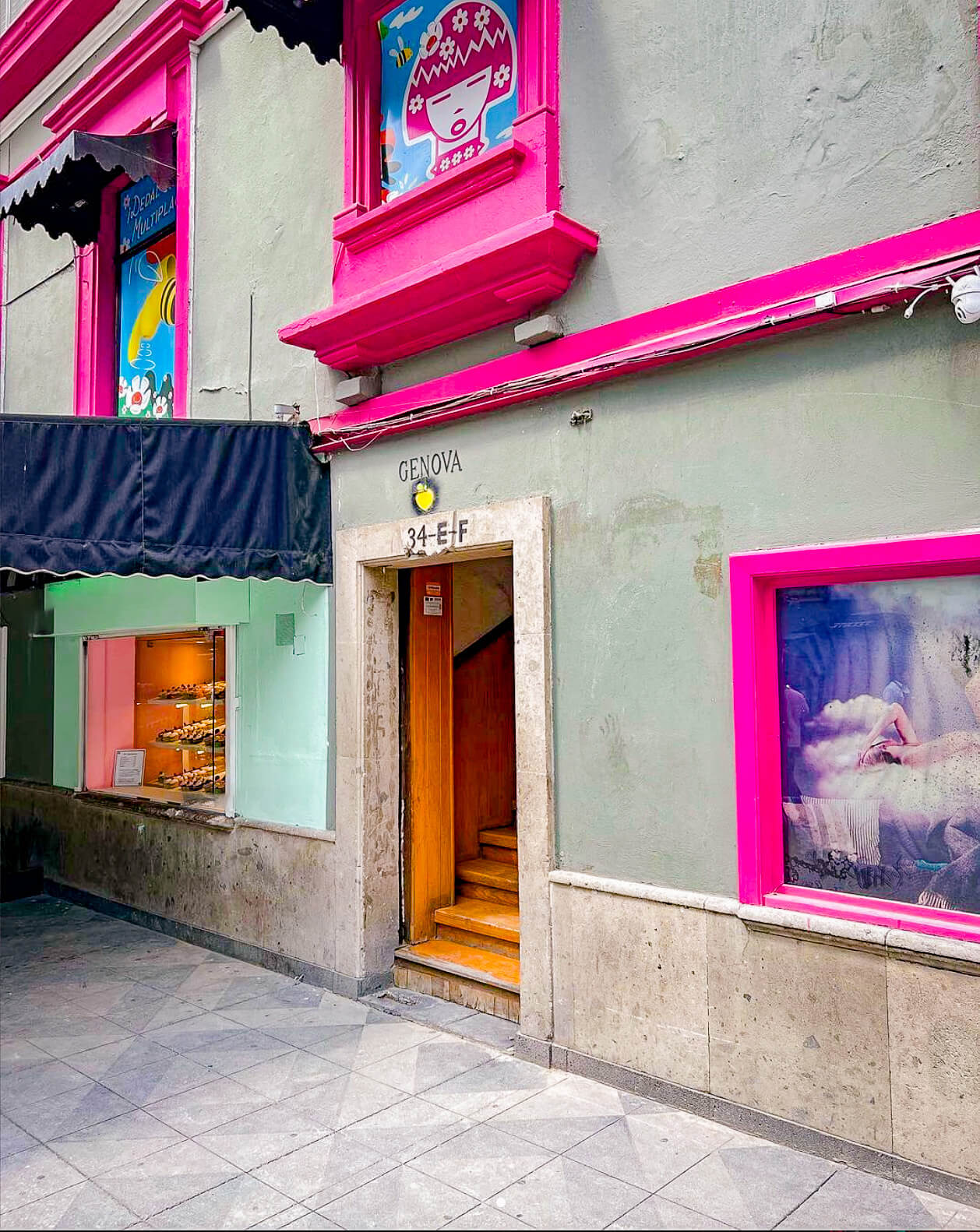
Zona Rosa Mexico City's gay scene in 2026 is more complicated than a simple thumbs up or down. For years, the honest answer to "is it worth it?" was: mostly no, go elsewhere. That's still partly true. But something is happening in Zona Rosa that we didn't see coming — a handful of genuinely interesting new venues are starting to put some of the magic back. This is the full picture: what declined, why it happened, what's still worth your night, and what the new spots are actually like.
What Is Zona Rosa? A Quick Orientation
Zona Rosa — which translates to something between pink and rose, not red and not white, which is apt for a neighborhood that has always existed in a particular in-between — is the traditional gay neighborhood of Mexico City, located in the Colonia Juárez between Paseo de la Reforma and Avenida Chapultepec. The main gay strip runs along Calle Amberes, with Hamburgo, Génova, Florencia, and Niza branching off into a walkable cluster of bars, clubs, drag cabarets, and cruising clubs. It's been the anchor of LGBTQ+ life in CDMX since the 1990s, and the annual Pride Parade uses Paseo de la Reforma — which runs right through it — as its main artery.
At its peak, Zona Rosa was one of the most vibrant gay neighborhoods in Latin America. What happened to it is a story about urban drift, changing tastes, and the natural evolution of a city too big and too creative to keep its queer life in one place.
Why the Gay Scene Moved Out of Zona Rosa
The honest answer is that Mexico City's LGBTQ+ scene didn't so much abandon Zona Rosa as outgrow it. Like New York's Chelsea, London's Soho, or Berlin's Schöneberg, Zona Rosa served its historical purpose — a visible, concentrated, safe-ish gay enclave — and then the city evolved past it. When La Roma developed its queer bar scene around Revuelta Queer House, when La Juárez started hosting SIC Club and Estéreo, when La Condesa got Tom's Leather Bar and Un Club Bonito, the people who care most about their nightlife went where the energy was.
Today, the best gay clubs in Mexico City are not concentrated in Zona Rosa. They're scattered across the city in a way that reflects how queer life actually works in a metropolis of this scale — distributed, diverse, and moving. If you want to understand where that scene actually is, our Mexico City areas blog covers it neighborhood by neighborhood, and our gay clubs blog breaks down the full list for 2026.
"The best gay clubs in Mexico City are no longer concentrated in one street. The scene is everywhere now — and that's actually good news."
The Real Problems: Safety, Genova, and the Tourist Trap
The Genova Street Problem
If there's one rookie mistake we see too often, it's first-time visitors strolling along Génova Street, hoping to find the queer magic of Mexico City. You won't find it there. Génova is overcrowded, noisy, and full of pushy promoters trying to drag you into venues that need to beg for your attention. The sidewalks are cluttered with street vendors selling incense and overpriced trinkets, and the energy is chaotic in the wrong way. The best spots in this city don't need to shout at you from the street.
The only real reasons to set foot on Génova are Dallas — the legendary cruising club that remains an institution — and the genuinely excellent Korean BBQ at Goguinara. Otherwise, skip it and find your way to Amberes, Hamburgo, or Niza instead.
Safety Concerns at Certain Venues
We have to say this clearly: some of the biggest names in Zona Rosa have serious problems. Rico Club has been repeatedly shut down by authorities through 2025–2026 for safety violations — check whether it's actually open before you attempt to go. Other large venues from the Grupo Cabaretito umbrella have accumulated credible reports of drug distribution inside and security misconduct toward LGBTQ+ patrons. We don't endorse any venue where you can't let your guard down completely.
This doesn't mean Zona Rosa is dangerous — it means you should choose your venues carefully, as you would in any major city's nightlife district. The places worth visiting are the ones that have earned your trust over time, not the ones with the biggest neon signs on the loudest street.
Not So Gay Anymore
The crowd in many Zona Rosa venues has shifted noticeably toward straight and mixed audiences. This isn't a moral complaint — it's just useful to know. If you're specifically looking for queer spaces, some of the venues that made Zona Rosa famous no longer deliver that experience reliably. Blow Bar, for example, has become a very popular club with a diverse crowd that is no longer primarily gay. It's a good time — but it's not the same thing.
The Gay Mexico City Guide
Know exactly where to go — in Zona Rosa and across the whole city.
- ✓ 180+ vetted gay venues — bars, clubs, saunas & more
- ✓ 12 Google Maps lists organized by neighborhood
- ✓ Weekly Nightlife Itinerary — where to be every night
- ✓ Sliding scale pricing — pay what feels right
What's New: The Spots Making Zona Rosa Interesting Again
Here's the update we didn't see coming. After years of the story being purely about decline, Zona Rosa has started attracting genuinely interesting new venues that are worth talking about — not just legacy spots hanging on, but new concepts with a clear point of view. None of this reverses the broader shift in where the city's best gay nightlife lives. But it does mean that writing off Zona Rosa entirely is no longer the right call.
The queer sensorial bar that Zona Rosa needed
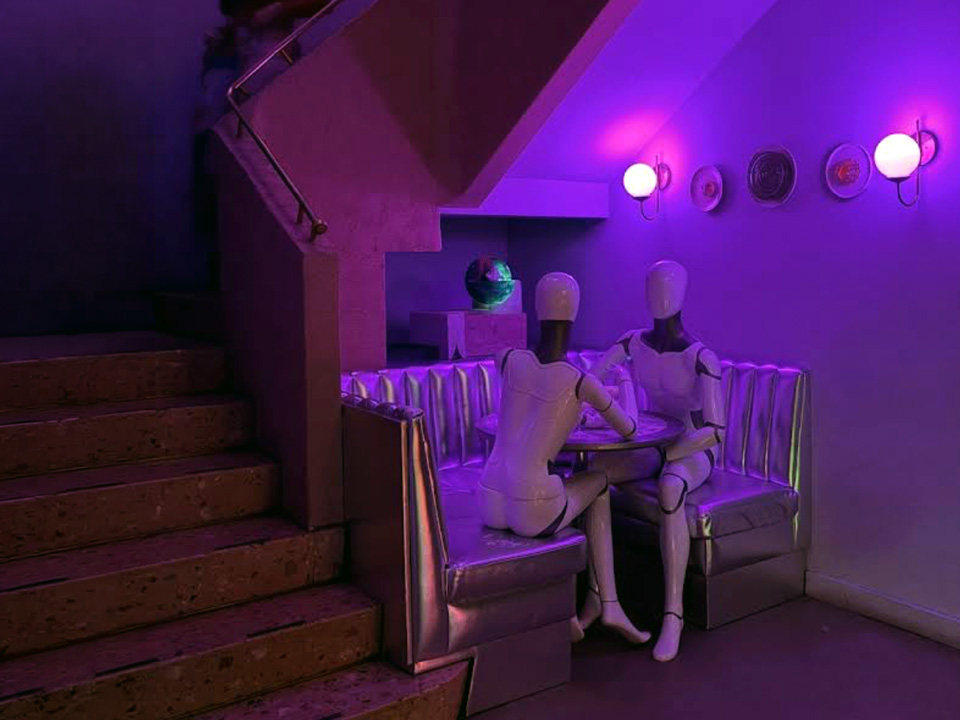
Abrazarnos arrived in 2025 and immediately became the most talked-about new queer space in Zona Rosa — not for the usual reasons, but because it doesn't feel like anything else on the strip. The concept is a casona (an old mansion) on Hamburgo Street, converted into themed rooms each with its own mood and identity: a cuddle room designed around the act of physical connection, a cold room with kinetic visuals for intimate encounters, a main salon with a bar and space to move, and an open patio that functions as a breath of air between the different worlds inside. Art by contemporary Mexican and international artists runs through the whole space — works by Romeo Gómez López, Jillian Mayer, Zemmoa, and Valentina Valentina create an environment where the aesthetic is doing real work, not just filling wall space.
The music moves from synth-pop eighties to current productions influenced by that same aesthetic. The crowd is queer, artsy, and there for the experience rather than the Instagram — and the warm, welcoming service is part of the point. "More than a bar, Abrazarnos is a tribute to the generations that imagined impossible futures and bet on self-expression, gender ambiguity, and personal liberation," as the venue's own description puts it. Reviewers consistently describe it as a "fantastic local bar — great cocktails, great music" and as "un refugio de libertad" (a refuge of freedom). The cocktails are on the pricier side, the space fills up and gets warm on peak nights — worth going earlier in the evening before it reaches capacity.
Local Tip
Every room requires its own reservation — you can't just wander between them freely. DM @vamosaabrazarnos on Instagram to book the specific space you want. Open Wednesday to Saturday from 8 PM. Come before 11 PM to actually enjoy the atmosphere before it peaks.
The rooftop that finally gave Zona Rosa something to look up to
Penthouse opened in late 2025 and brought something Zona Rosa genuinely didn't have: an open-air rooftop terrace with sweeping views over the city, where the vibe is deliberately relaxed and the crowd can actually breathe. The contrast with the overcrowded floors of a typical Niza club is immediate and welcome. Time Out Mexico described it as a place where the crowd "esmera por su outfit" — the dress code isn't enforced but the social compact is real — and where the music moves between electronic hits and pop without trying too hard. Drag shows punctuate the night. The service keeps up. And unlike most of the strip's flagship clubs, there's no suffocating overcrowding. You can see the person you're talking to, which shouldn't be a differentiator but is.
By the decks, Penthouse has attracted real talent: Saza Fischer and America Fendi have both played here. The format pairs with Voltaire — the drag and burlesque show venue in the same building — for a natural progression: catch the Voltaire show first and your Penthouse entry is included in the ticket, saving you the 400 MXN cover. Open Fridays and Saturdays. This is the kind of venue that makes you reconsider whether Zona Rosa was done too soon.
Local Tip
Go to Voltaire's show first — entry to Penthouse is included. Arrive to Penthouse after 12:30 AM when the rooftop reaches its peak but before the post-show crowd floods in. The view is best on a clear night, and they happen more often than you'd expect.
The after for the die-hards — 3 AM to sunrise
For the die-hards — those committed to squeezing every last hour out of a night — Cocktail Bar is Zona Rosa's best-kept late-night secret. While the main clubs are winding down around 3 AM, Cocktail is just getting started. This is a proper after-hours spot that runs until dawn, drawing the crowd that isn't ready to sleep and knows where to find the rest of the night. The format is simple and it doesn't need to be anything more: a dark bar, music that keeps you moving, and a crowd of people who made a deliberate choice to still be here. Not for the faint-hearted or the early risers, but essential knowledge for anyone planning a full CDMX Saturday.
What's Still Worth Visiting in Zona Rosa
Alongside the new spots, several Zona Rosa institutions remain genuinely worth your time. These are the places that have survived because they're good, not just because they were first.


The Verdict: Zona Rosa in 2026
The story of Zona Rosa in 2026 is more nuanced than it was two years ago. The big picture hasn't changed: the best gay clubs in Mexico City — SIC, Brutal, Discoteca, Un Club Bonito, Revuelta Queer House — are not in Zona Rosa, and that's not going to reverse. If you're building a nightlife itinerary from scratch, you should be spending most of your time in La Juárez, La Roma, and La Condesa.
But Zona Rosa deserves credit for what's happening at the margins. Abrazarnos brought a genuinely original queer concept to Hamburgo Street. Penthouse gave the area its first proper rooftop club with real production values. Cocktail Bar fills the after-hours gap that nobody else in the neighborhood covers. And the legacy venues — Nicho, Dallas, El Almacén — are still doing exactly what they've always done, which for their specific audiences remains irreplaceable.
The right approach to Zona Rosa in 2026 is selective, not dismissive. Skip Génova. Avoid the venues with safety red flags. Know which stops are worth your time. And if you want the full map — every venue worth visiting across the whole city, organized by neighborhood and ready to use on your phone — that's what the guide is for.
"Skip Génova. Be selective. And know that a few new spots are making Zona Rosa worth a stop again — just not the whole night."
The Gay Mexico City Guide
Zona Rosa covered. And 12 other neighborhoods, too.
- ✓ 180+ venues across every neighborhood — vetted, honest, updated
- ✓ 12 Google Maps lists, one per neighborhood, ready on your phone
- ✓ Weekly Nightlife Itinerary — where to be every single night
- ✓ Pay what you want — sliding scale pricing